
Our Approach
Working With Communities. Building Solutions. Creating Lasting Change.
At Children Relief Service (CRS), the way we work has grown from what we have seen, experienced, and learned alongside the communities we serve.

Since we began our work in Dzaleka in 2014, we have walked alongside children, young people, girls, women, families, refugees, and members of the host community. We have seen the challenges people face, but we have also seen their strength, creativity, determination, and willingness to build a better future.
We have seen children struggling to stay in school. We have seen families worrying about their next meal. We have met young people who have completed school but have few opportunities to use their skills. We have also seen girls and women facing barriers to education, economic independence, safety, and participation in their communities.
These experiences have shaped how we work.
We believe people need more than assistance. They need protection, opportunities, skills, information, and the chance to be part of the solutions that affect their own lives.
That is at the heart of our approach.
How We Work

1. We Listen Before We Act
We do not want to decide everything from an office.
Before we start a programme or respond to a need, we try to understand what people are actually experiencing. We listen to children, young people, parents, women, community leaders, teachers, volunteers, and others who know their communities well.
Sometimes what we see on the surface is not the whole problem.
For example, a young person may need vocational training, but after the training they may still struggle to find a way to earn an income. A family may need food today, but they may also need seeds, farming knowledge, livestock, or another livelihood opportunity that can help them provide for themselves in the future.
When we listen, we are better able to respond to the real need, not only what we see at first.
2. We Try to Understand the Bigger Picture
The challenges people face are often connected.
A child who goes to school hungry may find it difficult to concentrate. A family without a reliable source of income may struggle to provide food, pay school-related costs, or meet other basic needs. A young person without skills or opportunities may become more vulnerable. A girl or woman experiencing violence may also face economic and social barriers that make it harder to seek help.
For us, this means we cannot always look at one problem in isolation.
We try to understand what is happening around that problem and how our different programmes can work together to make a meaningful difference.
We look beyond the immediate need and ask what can help people move forward.
3. We Plan and Work With Communities

We do not see community members simply as beneficiaries.
We see them as people with knowledge, skills, ideas, experience, and the ability to contribute.
In the communities where we work, we meet young people with ideas, women ready to learn and lead, farmers who understand their land, teachers who care about children, community leaders who understand local challenges, and volunteers who are willing to help others.
We try to build on these strengths.
Where possible, we involve community members in identifying challenges, planning activities, implementing programmes, and thinking about how the work can continue.
We believe the strongest solutions are those that people can understand, participate in, and take ownership of.
4. We Combine Immediate Support With Opportunity

We understand the importance of responding to immediate needs.
When a family is hungry, food matters. When a child is at risk, protection matters. When a young person has no opportunity, practical support matters.
But our experience has also taught us that immediate assistance alone cannot address every challenge.
That is why we also invest in education, vocational skills, entrepreneurship, agriculture, food security, sustainable livelihoods, youth empowerment, and girls’ empowerment.
We want to help people not only get through today’s challenges, but also build opportunities for tomorrow.
Our goal is not simply to help people survive. We want to help people move forward.
5. We Put Children First
Children remain at the heart of CRS.
Our work began from a concern for vulnerable children, and child protection continues to be central to everything we do.
We know that poverty, displacement, hunger, interrupted education, neglect, abuse, exploitation, and violence can affect a child’s safety, development, and future.
For us, protecting children is not only about responding after harm has happened. It is also about prevention.
It means helping children understand their rights, supporting families, creating safer environments, strengthening communities, listening to children, and connecting people with the support they need.
Every child deserves to be safe, heard, respected, and allowed to grow.
6. We Create Opportunities for Young People and Girls

We work with many young people who have energy, ideas, and ambition but limited opportunities.
We also work with girls and young women who want to learn, work, lead, and become more independent, but who often face additional barriers.
Through skills training, education, entrepreneurship, leadership, and other opportunities, we try to help them turn their abilities into something they can use in their lives.
We have seen how a skill can change someone’s confidence.
We have seen how learning a practical trade can open a door to income.
We have seen how an opportunity can help a young person begin to believe differently about their future.
Sometimes what people need is not someone to do everything for them, but someone to walk with them while they build something for themselves.
7. We Work With Refugees and Host Communities
CRS grew out of the realities of displacement, and this experience has shaped how we understand vulnerability.
In and around Dzaleka, refugees and host communities live alongside one another and often experience many of the same challenges, including poverty, unemployment, food insecurity, limited services, and lack of opportunities.
Where our programmes and resources allow, we work with both communities and look for ways to promote inclusion, cooperation, and stronger relationships.
We believe communities are stronger when people are not left behind.
8. We Work With Others
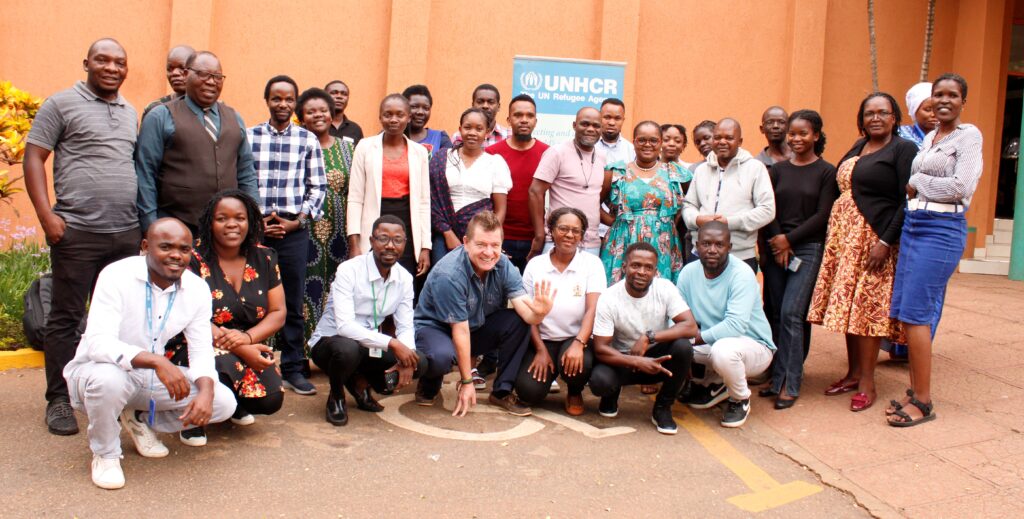
We know that CRS cannot solve every challenge alone.
We therefore value working with government institutions, schools, community leaders, civil society organizations, humanitarian and development partners, donors, technical experts, volunteers, and other organizations.
Partnerships help us learn from others, reach more people, improve our programmes, connect communities to services, and develop stronger solutions.
At the same time, we want our partnerships to remain connected to the realities and priorities of the people we serve.
We believe that working together gives communities a better chance of achieving lasting change.
9. We Learn and Adapt
Our approach has not come from a textbook or been developed only in a meeting room.
It has been shaped by experience.
Since 2014, we have tried things that worked well, encountered things that did not work as expected, faced difficult circumstances, and learned from each experience.
We work in an environment where needs are often greater than the resources available. Sometimes we have to do more with less.
That reality has taught us to be practical, to listen carefully, to use resources responsibly, to work with others, and to keep looking for better ways of doing things.
We are not afraid to learn, adapt, and improve.
10. We Protect People’s Dignity
For us, development is not only about numbers and activities.
It is about the real person behind those numbers.
It is a child who feels safe.
A young person who discovers a skill and begins to believe in their future.
A girl who gains confidence and realizes that she can lead.
A family that is able to put food on the table.
A person who once felt forgotten but now feels that someone has listened.
A community that begins to see that it can take action and solve some of its own challenges.
That is why we try to carry out our work with respect, dignity, inclusion, accountability, compassion, and integrity.
What We Are Working Toward

We know that CRS cannot solve every problem in the communities where we work.
But we believe that we can make a difference.
We want our programmes to do more than deliver activities. We want them to create opportunities, strengthen people, protect children, support families, and help communities become more resilient.
When we support a child, we think about that child’s future.
When we train a young person, we think about what they can do with that skill.
When we support a family with food or livelihood assistance, we think about what can help them become more secure tomorrow.
When we work with a community, we think about what can remain after the project ends.
For us, lasting change is not about doing everything for people. It is about walking alongside people and helping create the conditions in which they can move forward.
Our Commitment
Our approach will continue to grow as the needs of our communities change.
But some things will remain at the centre of our work.
We will continue to listen before we act, put children first, work alongside communities, create opportunities, promote dignity, build partnerships, learn from experience, and connect immediate needs with longer-term solutions.
We may not always have enough resources to respond to every need we see.
But we will continue to do what we can, with the people we work with, using the resources available to us responsibly.
We’ve seen that even a small opportunity can make a meaningful difference in someone’s life.
And we believe that when communities, partners, and people work together, that difference can grow into lasting change.
Working With Communities. Building Opportunities. Creating Lasting Change.
Protecting Children, Transforming the Community