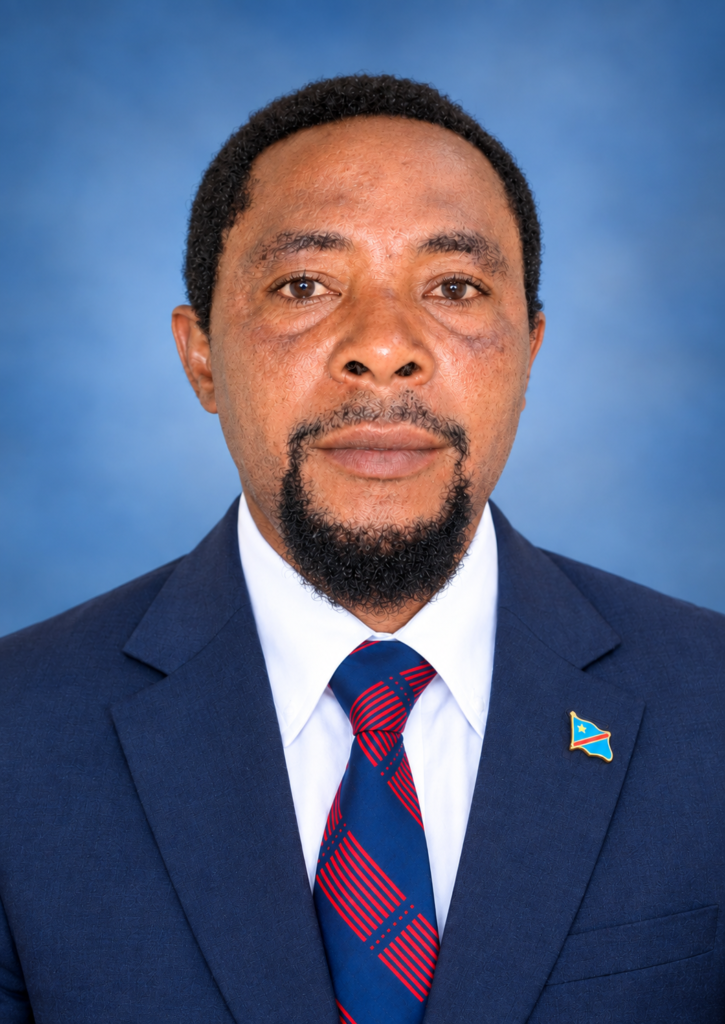
Founder & Executive Director, Children Relief Service (CRS)
Roger Tiemuka Shamavu is the Founder and Executive Director of Children Relief Service (CRS), a refugee-led nonprofit organization founded on 11 May 2014 in Dzaleka Refugee Camp, Malawi.
My journey to founding CRS began long before the organization had a name. It grew from my experience as an educator, my commitment to children, and my desire to serve people facing displacement, poverty, and other difficult circumstances.
Today, I lead CRS in working alongside vulnerable children, youth, women, families, refugees, and host communities through child protection, education, food security and sustainable livelihoods, girls’ empowerment, youth empowerment, and gender-based violence prevention and response.
But to understand why I founded CRS, it is important to understand the journey that brought me here.
A Journey from Education to Community Service
My journey into community service began in the Democratic Republic of Congo, where I started my career as an educator. I became a head teacher at a secondary school that I helped establish.
Education was never simply a profession to me. I saw it as a way to give children hope, help young people discover their potential, and contribute to the future of their communities.
Through teaching and school leadership, I learned that education can do much more than transfer knowledge. It can build confidence, open opportunities, strengthen families and communities, and help young people imagine a different future.
That belief has remained at the heart of my work.
From the Democratic Republic of Congo to Malawi
Then conflict changed everything.
Because of war and insecurity in the Democratic Republic of Congo, I was forced to leave my country and became a refugee in Burundi. While there, I served as the president of Congolese refugees in Cibitoke Province.
I later returned to the Democratic Republic of Congo because I wanted to continue leading the school and serving the students. However, insecurity continued, and eventually it became impossible for me to remain safely in my country.
In 2006, I made the difficult decision to leave again, this time for Malawi.
I first arrived at Luwani Refugee Camp in southern Malawi. After about a year, refugees were relocated to Dzaleka Refugee Camp.
Dzaleka became more than a place where I sought safety.
It became the community I would dedicate my life to serving.
In 2008, I began my professional work in Malawi as a primary school teacher at Umudzi Katubza Primary School in Dzaleka, where I taught until 2013.
Those years in the classroom brought me very close to the realities facing children and families in the community. They also became an important foundation for my later work in child protection and community development.
Discovering the Need for Child Protection
During my years of teaching at Umudzi Katubza Primary School, I began to see that many of the challenges children faced went far beyond the classroom.
I saw children experiencing vulnerability, abuse, and situations in which they were not adequately protected. I also came to understand that, in some cases, children could be harmed by people who did not fully understand the impact of their actions or recognize that what they were doing was abuse.
I began asking myself:
“How can we protect children if communities do not fully understand their rights and needs?”
That question changed the direction of my life.
I realized that teaching children was important, but it was not enough. There was also a need to help parents, teachers, community leaders, religious leaders, young people, and other stakeholders understand how to protect children and uphold their rights.
The importance of this understanding is also recognized internationally. UNICEF notes that children’s rights are still not fully implemented or widely known and understood, and emphasizes the importance of ensuring that children and adults know about children’s rights. Source: UNICEF, Convention on the Rights of the Child.
I wanted to contribute to a different understanding of childhood, one in which children are not simply seen as people who need discipline or assistance, but as human beings with rights, dignity, potential, and a future.
The Birth of Children Relief Service
As my commitment to child protection and community service grew, I began organizing and supporting community-based activities in Dzaleka.
I wanted to share what I was learning with others and encourage people to become part of protecting children and supporting vulnerable families.
But I also realized that the work needed a structure—a way to organize people, coordinate activities, keep records, build partnerships, and develop programmes that could respond to the needs of the community.
That was the beginning of Children Relief Service (CRS).
On 11 May 2014, Children Relief Service was founded in Dzaleka Refugee Camp.
What began with a commitment to protect children gradually developed into a broader community-driven organization working with vulnerable children, youth, women, families, refugees, and host communities.
The founding of CRS was only the beginning. I knew that if I wanted to serve the community more effectively, I also needed to continue learning.
Learning, Training and Professional Development
Alongside building CRS, I continued to strengthen my knowledge through formal education, professional training, community work, and practical experience.
In 2014, I completed a Child Protection and Participation Certificate course through Boston College in the United States, through learning opportunities connected with Jesuit Refugee Service (JRS) and Jesuit Worldwide Learning (JWL).
In 2021, I completed a Youth Worker course through the University of Utah.
These experiences strengthened my understanding of child protection, participation, youth development, community engagement, and the importance of creating opportunities for people to take part in decisions that affect their lives.
I also continued my formal education. I studied Liberal Arts with a concentration in Social Work at Regis University and later completed an Associate Degree in Business Administration at Southern New Hampshire University.
My education has never been limited to classrooms and certificates. Some of my most important lessons have come from working directly with people and communities.
Over the years, I have:
Worked as a Primary School Teacher at Umudzi Katubza Primary School in Dzaleka from 2008 to 2013.
Taught child protection courses through Jesuit Refugee Service and Jesuit Worldwide Learning.
Served as a Community Liaison Officer with Jesuit Refugee Service.
Worked as a Livelihood Programme Supervisor with CAD, an ACT Alliance initiative.
Volunteered as a Livelihood Coach with Plan International.
Each experience has taught me something different and strengthened my understanding that meaningful and sustainable change requires knowledge, commitment, collaboration, accountability, and continuous learning.
Growing CRS Through Service
As the needs of the community became clearer, the work of CRS also expanded.
Our work began with a strong focus on child protection, but I came to understand that protection cannot be separated from the conditions in which children and families live.
A child cannot fully thrive when their family is facing hunger.
A young person cannot easily build a secure future without education, skills, and opportunities.
Families facing poverty and displacement may struggle to protect their children when they are also struggling to meet their basic needs.
This is why CRS gradually developed a broader community-led approach that connects child protection, education, food security and sustainable livelihoods, girls’ empowerment, youth empowerment, and gender-based violence prevention and response.
For me, these areas are connected.
Our work is about protecting people from harm while also helping create the conditions in which they can become more secure, confident, self-reliant, and able to shape their own futures.
Why I Continue to Serve
I have spent many years volunteering and serving communities because I believe something very simple:
We are not here only to receive. We are here to give.
My experience as a refugee has shaped this belief deeply.
I know what it means to leave behind a home, a country, familiar surroundings, and a life you once knew. I also know what it means to receive support from others during difficult times.
But receiving support should not be the end of the journey.
When people are given opportunities to learn, develop skills, rebuild their confidence, and contribute to their communities, they can become a source of strength for others.
That is one of the principles that continues to guide my work through CRS.
I believe vulnerable people should not be defined only by their vulnerability.
They have abilities. They have ideas. They have dignity. They have potential.
Our responsibility is to help create opportunities for that potential to grow.
The Challenges We Face
The journey has not been easy.
CRS continues to face significant challenges, particularly limited resources.
There are times when we do not have enough funding to provide salaries for teachers, facilitators, and volunteers who are helping us serve the community.
There are also times when the needs of the community are much greater than the resources available to respond to them.
Yet we continue.
Because behind every programme is a child who deserves protection.
Behind every training is a young person who deserves an opportunity.
Behind every livelihood activity is a family trying to become self-reliant.
And behind every person we reach is a human being with dignity, potential, and hope.
These realities remind me why CRS must continue to seek partnerships, mobilize resources, strengthen local capacity, and work together with communities.
The challenges are real.
But so is the hope.
From Displacement to Service
My journey from the Democratic Republic of Congo, through displacement and refugee life in Burundi and Malawi, to becoming an educator, learner, volunteer, community leader, and founder of Children Relief Service has taught me something important:
Our circumstances do not have to define our future.
Sometimes, the experiences that change our lives can also become the foundation for serving others.
I could not change the circumstances that forced me to become a refugee.
But I could choose what I would do with that experience.
I Chose to Serve
Today, through Children Relief Service, we continue working toward a future where children are protected, young people are empowered, girls and women have opportunities, families can build sustainable livelihoods, and vulnerable communities can build stronger and more secure lives.
This is not simply the story of an organization. It is the story of a journey from displacement to service, from receiving help to becoming a source of help for others. And the journey continues.
My Commitment
I remain committed to working alongside communities, not simply doing things for people, but helping create opportunities for people to participate, lead, and build solutions for their own futures.
Through CRS, I continue to carry the belief that first inspired me as an educator:
Every child deserves protection. Every young person deserves an opportunity. Every family deserves dignity. Every community deserves the chance to build a stronger future.
Roger Tiemuka Shamavu Founder & Executive Director Children Relief Service (CRS)